
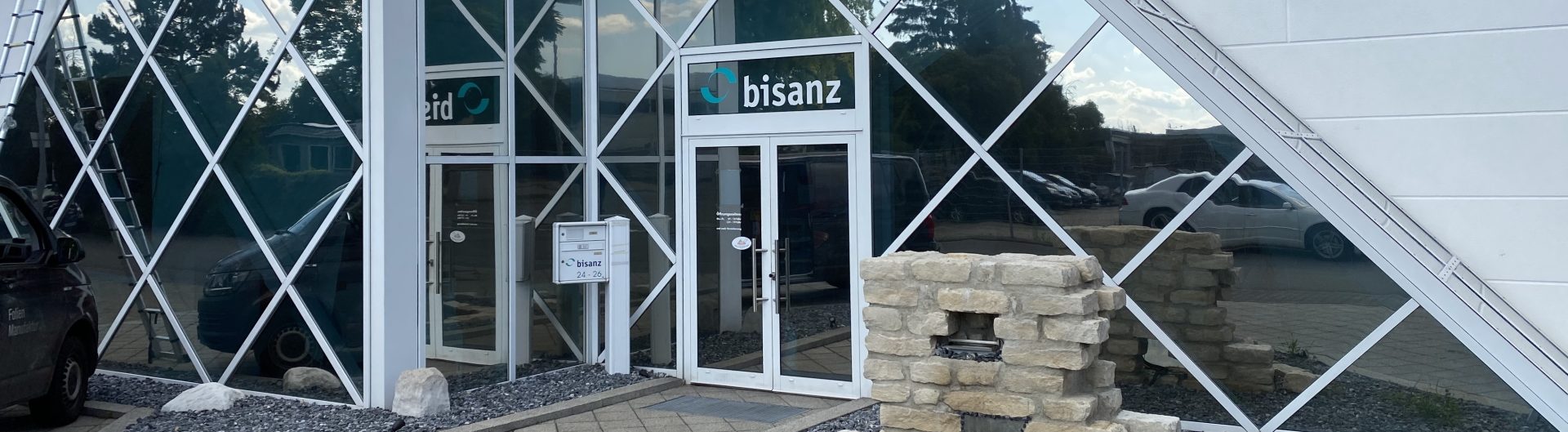
Privacy & UV Protection for Buildings
Solar Control Film: Keep the Heat and UV Outside
The cost-effective alternative to awnings, blinds and air conditioning – applied to the glass you already have.
Solar, UV, Heat Rejection, Mirrored – Which Is Which?
As with frosted film, a lot of names circulate for similar products: solar control film, UV window film, heat rejection film, thermal film, mirrored or reflective window film, anti-glare film. Unlike frosted film, though, they do not all mean the same thing – here it pays to look closer.
UV protection is something virtually every window film delivers: almost the entire ultraviolet portion of sunlight is stopped. That is why furniture, wood floors, rugs and goods in a shop window stop fading behind filmed glass. But UV is only a small share of the sun's energy – on its own it does nothing about heat.
Heat arrives mainly as infrared radiation and visible light. Countering that takes solar films with metallic or ceramic layers that reflect or absorb part of that energy. How much a given film actually keeps out is stated in its data sheet as the total solar energy rejection (or g-value) – and it varies considerably from product to product.
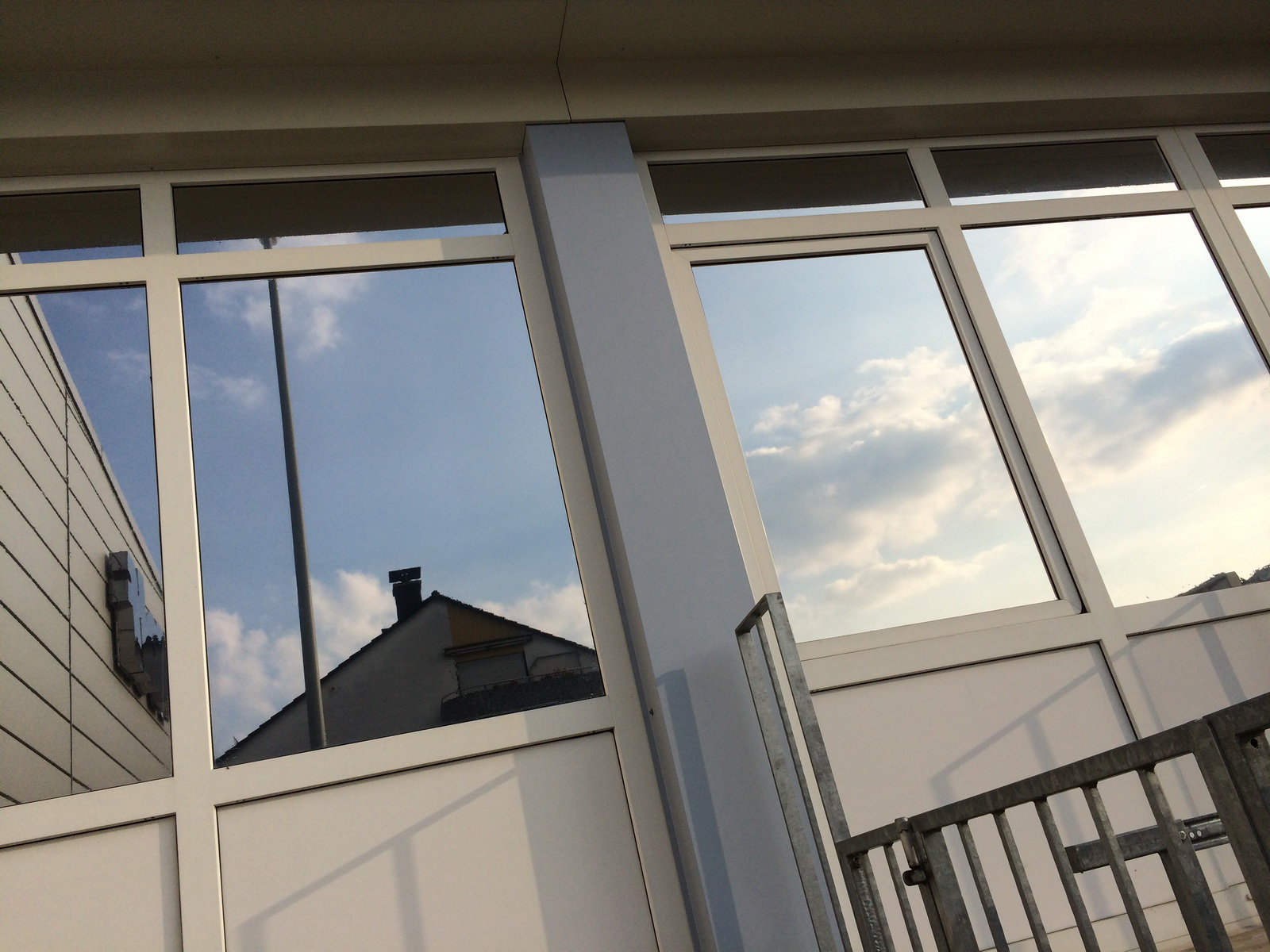
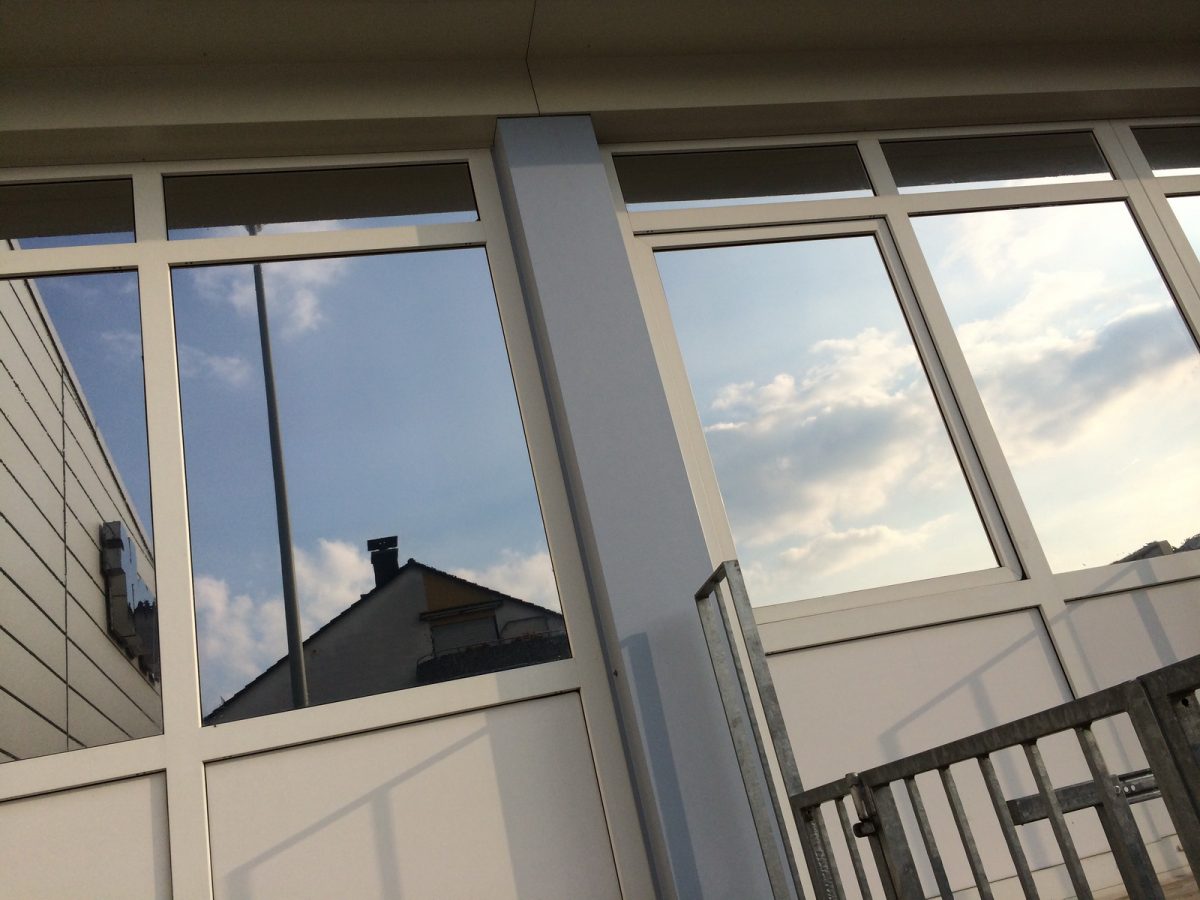
Mirrored film is one variant of this: strongly reflective, therefore particularly effective against heat, and opaque from the outside during daylight. Alongside it there are neutral films that are barely noticeable from outside – essential wherever the appearance of the façade must not change.

Where Solar Film Pays for Itself
Anywhere the glass lets in more sun than the room can take.
Offices with a south-facing façade
Unbearably warm from mid-morning, screens reflecting, air conditioning running flat out. Film reduces both temperature and glare – without anyone closing the blinds and working in the dark.
Conservatories and roof glazing
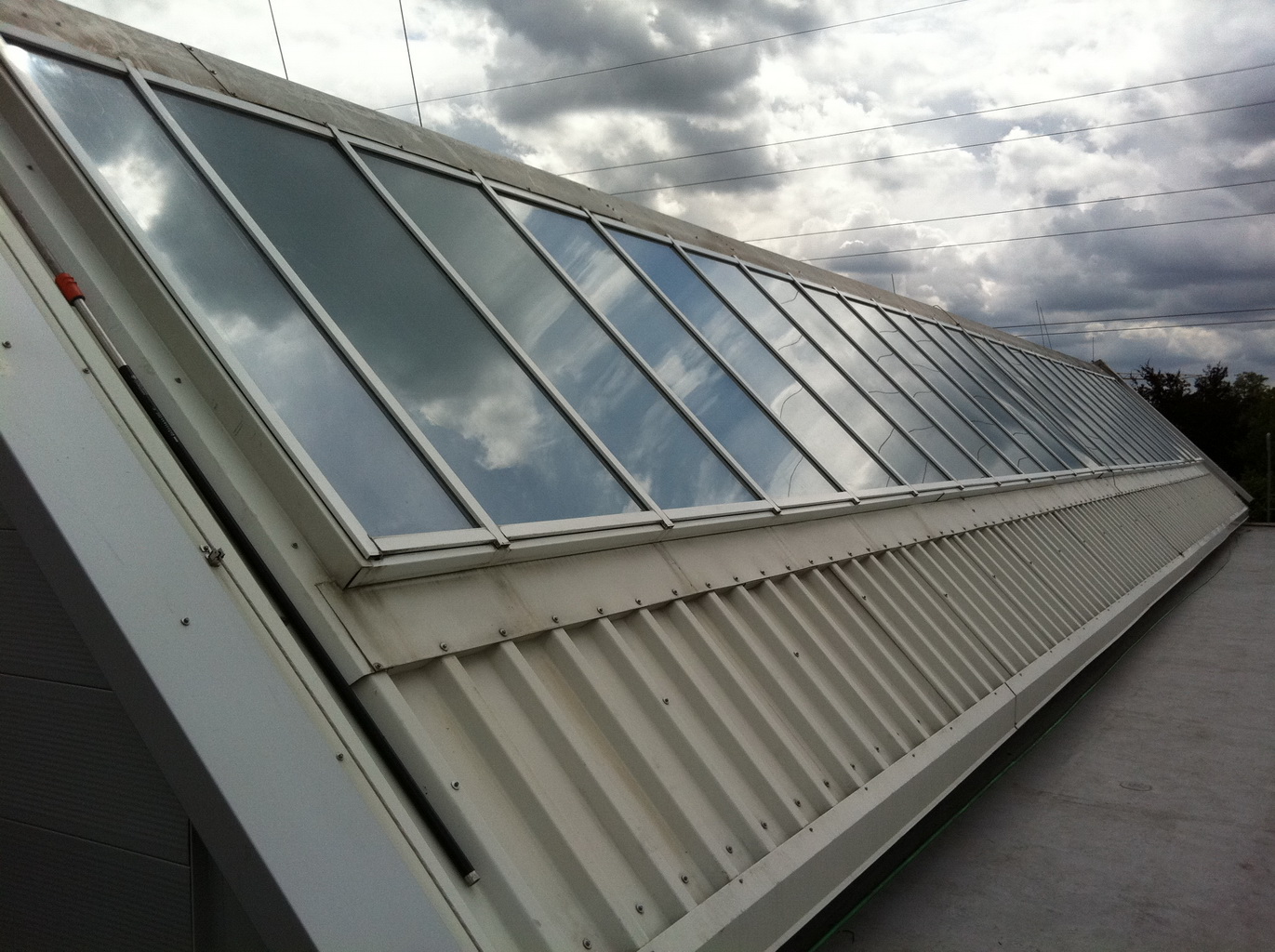
The classic heat trap. Film is often the only retrofittable answer here, because external shading is structurally impossible or ruins the look.
Shops and window displays
Goods on display fade within weeks – textiles, packaging, print and wood first. UV protection keeps stock saleable.
Practices and waiting areas
A comfortable temperature without a draught from the air conditioning, plus glare control for screens at the reception desk.
Homes with valuable interiors
Parquet, designer furniture, artwork and books take UV damage permanently. You only notice it once it has happened – and then it cannot be undone.
Buildings with a high cooling load
Where cooling is the largest item in summer consumption, the film usually pays for itself within a few cooling seasons.
Why We Look at the Glass First
Solar film is not a product you can stick onto any pane of glass – and that is exactly where DIY attempts tend to fail.
Thermal stress: an absorbing film heats the pane. On tinted glass, very large formats, partly shaded panes or glass with existing edge damage, that can cause stress cracks. Which film is safe on which glass depends on the glass type, build-up, size and installation situation – we establish that in advance rather than finding out the hard way.
Insulated glazing: on multi-pane insulating units an unsuitable film can affect the manufacturer's warranty on the edge seal. We clarify that too before quoting.
Inside or outside: interior application is the normal case – protected from the weather, longer-lasting, easier to maintain. Exterior films are used where the pane cannot be reached from inside, or where the heat should not enter the glass in the first place.
That is why every quote starts with a site survey. It costs you nothing and spares both sides unpleasant surprises.
What the Film Delivers
Near-complete UV protection
Almost the entire UV component is held back – interiors, floors and stock stop fading.
Less heat in the room
A substantial share of solar energy is reflected or absorbed before it gets in. Exactly how much is given by the film's g-value.
Glare-free working
No reflections on screens, no squinting – and still daylight instead of a lowered blind.
Relief for the air conditioning
A lower cooling load means shorter run times, lower energy costs and a system that is not permanently at its limit.
An effect in winter too*
Certain films improve the U-value of the glazing and so reduce heat loss to the outside.
Retrofittable and reversible
No new glazing, no structural alteration. The film is applied to your existing glass and can be removed again.
* The winter effect does not apply to every solar film, only to versions with a low-emissivity (Low-E) coating. Whether and how much the U-value of your glazing improves depends on the existing glass build-up – we will give you the specific figures from the data sheet of the film selected. All other performance figures (UV rejection, g-value, light transmission) are likewise product-dependent; the binding values are the manufacturer's data for the film named in your quote.
Solar Control Film in the Rhine-Main Area
We install from Kiedrich in the Rheingau – offices, practices, shops, conservatories and homes in Wiesbaden, Mainz, Eltville, Rüsselsheim, Frankfurt and Darmstadt. Surveying and consultation on site are free, and the appointment is not a formality: glass type, format and installation situation decide which film can be used at all.
Related services: frosted and privacy film when the point is privacy rather than heat, storefront graphics for your message on the glass, and signage and wayfinding systems for the rest of the building.
Frequently Asked Questions About Solar Control Film
What is the difference between solar film, UV film and heat rejection film?
The terms are often used interchangeably in the trade, but technically they describe different priorities. UV protection is delivered by virtually any window film – it prevents fading, but does little about warmth, because UV is only a small share of the sun's energy. Heat rejection film targets infrared radiation and visible light and genuinely lowers room temperature. Solar control film is the umbrella term for both. If temperature is your concern, look at the total solar energy rejection (g-value) in the data sheet, not the UV figure.
Will the room get darker?
Slightly, but far less than most people expect – and incomparably less than with a closed blind. How much light comes through is given by the film's light transmission, which ranges from almost unchanged to strongly reduced depending on the product.
The real gain is that you no longer need the shading: most rooms with solar film end up brighter in daily use, because nobody lowers the blind any more.
Is mirrored film also opaque at night?
No – in fact the effect reverses after dark. Mirrored film works as long as one side is brighter than the other. During the day that is the outside, so you see out and nobody sees in. As soon as the lights go on inside and it is dark outside, the relationship flips: people outside can see in, and from inside you see your own reflection.
If you need privacy around the clock, frosted glass film is the right choice – it works regardless of the light – or you need a curtain, blind or shutter in addition.
Can the film cause the glass to crack?
Not when the film is properly selected. The risk is real but often underestimated: absorbing films heat the pane, and on tinted glass, very large formats, partly shaded panes or glass with edge damage that can produce stress cracks. That is why we check glass type, build-up, size and installation situation in advance and choose the film accordingly – rather than simply applying it and hoping.
Will I void the warranty on my insulated glazing?
That is the right question to ask, and the answer depends on the glass manufacturer. On multi-pane insulating units an unsuitable film can affect the warranty on the edge seal. We establish this during the site survey and tell you before you place the order.
Does the film go on the inside or the outside of the glass?
As a rule, the inside: there it is protected from weather and damage, lasts longer and is easier to clean. We use exterior application where the pane cannot be reached from inside, or where the heat should not enter the glass at all – in that case we use a film explicitly rated for outdoor use.
How long does the film last and what maintenance does it need?
Applied inside and using brand-name film, many years. For cleaning a soft cloth and an ordinary non-abrasive glass cleaner are enough; sharp edges, blades and scouring agents are out. After installation the film should be left to dry out for a few days – streaks or small water bubbles during that period are normal and disappear on their own.
Does it pay off compared with air conditioning or an awning?
In most cases yes, and from three directions: the outlay is well below external shading or an additional air-conditioning unit, there are no running electricity costs, and any existing cooling system has less work to do. On top of that, film needs no servicing, does not have to be retracted in wind, and leaves the façade unchanged – which is often where awnings and external blinds fail, whether on heritage grounds or with the building's owners' association.
Showroom
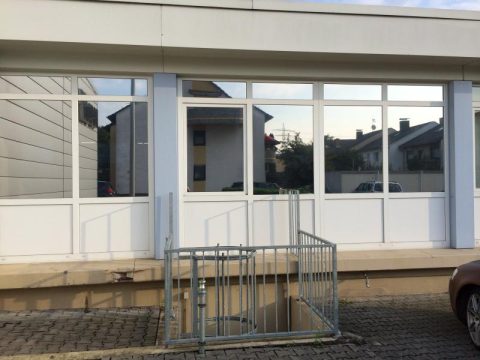
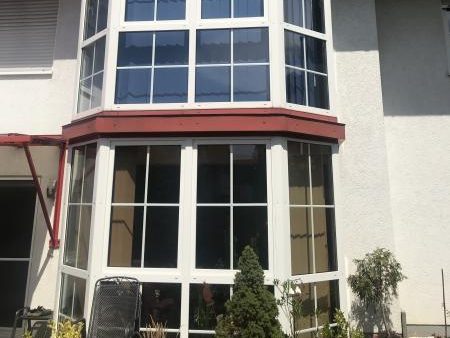
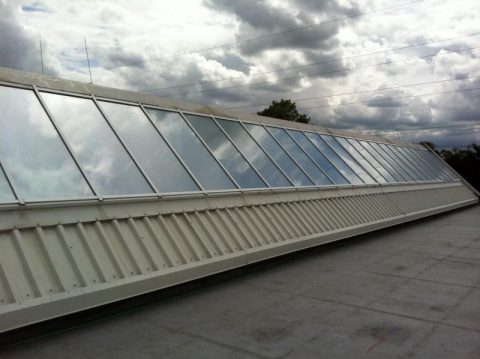
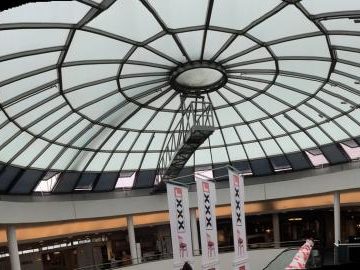
Our work: Privacy & UV Film for Buildings
reviews
What our customers say
★★★★★ 4,9 von 5 · 68 Bewertungen
Vielen Dank das ihr mich bei der Realisierung dieses Projekts unterstützt habt. Hier hat man es mit einem Hoch professionellen Team zu tun, ich stellte dem Team ein paar Bilder zur Verfügung wie ich mir das Finale Ergebnis grob vorstellte und war von dem geleisteten Beratungsaufwand sehr positiv überrascht. Hier wurden keine mühen gescheut um eine Passende Folie zu finden, nach einem Kurzen besuch vor Ort und letzten Detail Besprechungen wurde das Projekt in Auftrag gegeben. In der Gesamten zeit und bis zu Heutigen tag fühle ich mich äußerst gut beraten und bin mit dem Finalen Ergebnis mehr als zufrieden.
What was done?
Vollfolierung in wasabi Green und Schwarze Folierung des Grills, zusätzlich wurde Lackschutzfolie an allen schwarz glänzenden Elementen, der Motorhaube und dem Grill angebracht.
Super sympathisch, klasse Arbeit, zeitnaher Termin, fairer Preis. Vorbehaltlos zu empfehlen!
Ich habe bereits mein drittes Auto bei Folien-Manufaktur folieren lassen und war immer sehr zufrieden. Auch die Beratung und der allgemeine Kundenservice ist super. Meine Wünsche oder Vorstellungen der Folierung wurden immer erfüllt und zum Teil auch mit Ideen der Folien-Manufaktur übertroffen.